
Radiator and cooling system service in Buhl, Idaho
Overheating can damage a head gasket sooner than you'd think after the warning light appears. Our approach is to pressure test the system and inspect each component. Then we tell you which repairs are needed now and which aren't urgent.
Cooling system repair and service for all models and makes.
- 24-month warranty24,000 miles, through NAPA
- ASE techniciansCertified, on each job
- Estimate before workAlways in writing
- Open Mon to Thu7:30 to 5:30, book online
Cooling system services
From the thermostat to the radiator, the whole system is covered.
- Head gasket diagnosis after overheating
- Overflow reservoir replacement
- Coolant temperature sensor replacement
- Cooling fan replacement, mechanical and electric
- Heater core diagnosis
- Upper and lower radiator hoses
- Water pump replacement
- Thermostat replacement
- Radiator repair and replacement
- Pressure testing for hidden leaks
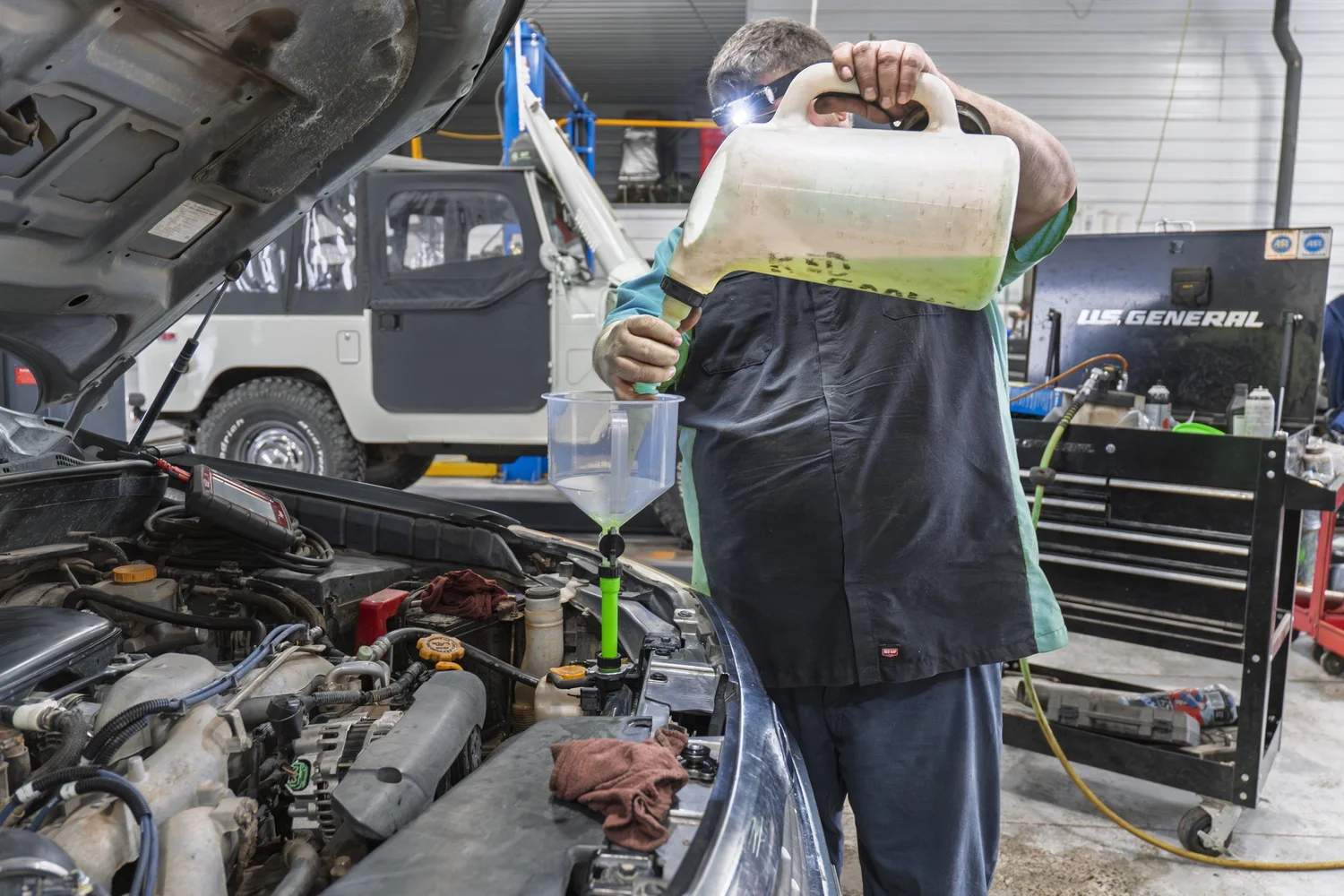
- Coolant flush and fill to the correct spec
- Cooling system inspection
A pressure test finds what you can't see
Coolant can disappear with no drip on the ground. A compromised head gasket, a radiator pinhole or a hose fitting that weeps will do it. Pressure testing is how we locate the loss.
Cooling system repairs are backed for 24 months or 24,000 miles by the NAPA AutoCare nationwide warranty.
- Hidden leaks located with a pressure test
- You approve a written estimate first
- Backed by NAPA for 24 months or 24,000 miles
Cooling system warning signs
Complete failure rarely comes without earlier signs.
- The heater blows cold airThe thermostat may be stuck, or coolant may be low
- The low coolant warning comes on
- The temperature gauge rises or reaches the red
- Exhaust that's white and smells sweetCoolant could be burning inside the engine
- A sweet odor inside the vehicleThis can point to a leaking heater core
- A puddle beneath the vehicleDepending on type, coolant is pink, orange or green
- The coolant reservoir is low again and again
- It overheats on long drives or while towing
When the gauge heads toward hot, pull over and let things cool, then call us. A few extra miles is sometimes all it takes to turn a cooling repair into an engine repair.
Hot summers and hard work
Temperatures above 100 degrees are normal in a Magic Valley summer. Cooling systems get worked hard by stop-and-go traffic during irrigation season, climbs on farm roads and loaded trailers.
Did the engine run warmer than normal in July or August? Have it inspected before that turns into a breakdown.
Coolant flush intervals
Depending on the coolant type, a flush is due every 2 to 5 years, or every 30,000 to 50,000 miles, on most vehicles. Long-life coolant breaks down too, only more slowly.
As coolant ages it becomes acidic and corrodes the water pump, the heater core and the radiator from within. If the date of your last flush is a mystery, we can check the coolant.
Cooling system FAQ
Didn't find your answer? Call (208) 543-8000.
How can I tell the water pump is going bad?
Watch for overheating, coolant leaking at the engine's front, or a grinding or whining noise coming from that area. Since the timing belt drives the pump on many engines, replacing both together makes sense.
The engine overheated once. It seems fine, so should I still come in?
You should. Even a single overheating event can warp the cylinder head or hurt the head gasket, and symptoms may not appear right away. We'll check for internal damage and pressure test the system. A compromised head gasket caught early is much cheaper than an engine failure down the road.
How does a flush differ from topping off?
A top-off puts fresh coolant in with the degraded coolant that's already there. With a flush, we drain the old coolant, clean the system and refill it with the correct mixture.
What does healthy coolant look like?
The normal color depends on the type in your vehicle and can be blue, pink, orange or green. Coolant that looks rusty, brown or cloudy has been contaminated or has broken down. That means a flush is overdue.
Is it okay to top off with water when coolant is low?
In an emergency it is, because overheating is worse than plain water. Keep in mind that water has no corrosion inhibitors and no freeze protection, and it waters down the remaining coolant. Afterward, get the system flushed and refilled with the correct coolant.
More services from Deep Creek
Need it looked at?
Give us a call or book online. You'll hear plainly what's wrong, and nothing starts until you have a written estimate.