
Check engine light diagnosis in Buhl, Idaho
When the light comes on, you want to know how serious it is, whether you can keep driving, and what a repair might cost. We get those answers by testing the vehicle.
You'll see what the codes and our tests showed before any repair is recommended.

- 24-month warranty24,000 miles, through NAPA
- ASE techniciansCertified, on each job
- Estimate before workAlways in writing
- Open Mon to Thu7:30 to 5:30, book online
The diagnostic process
We start from the fault code and work toward the cause.
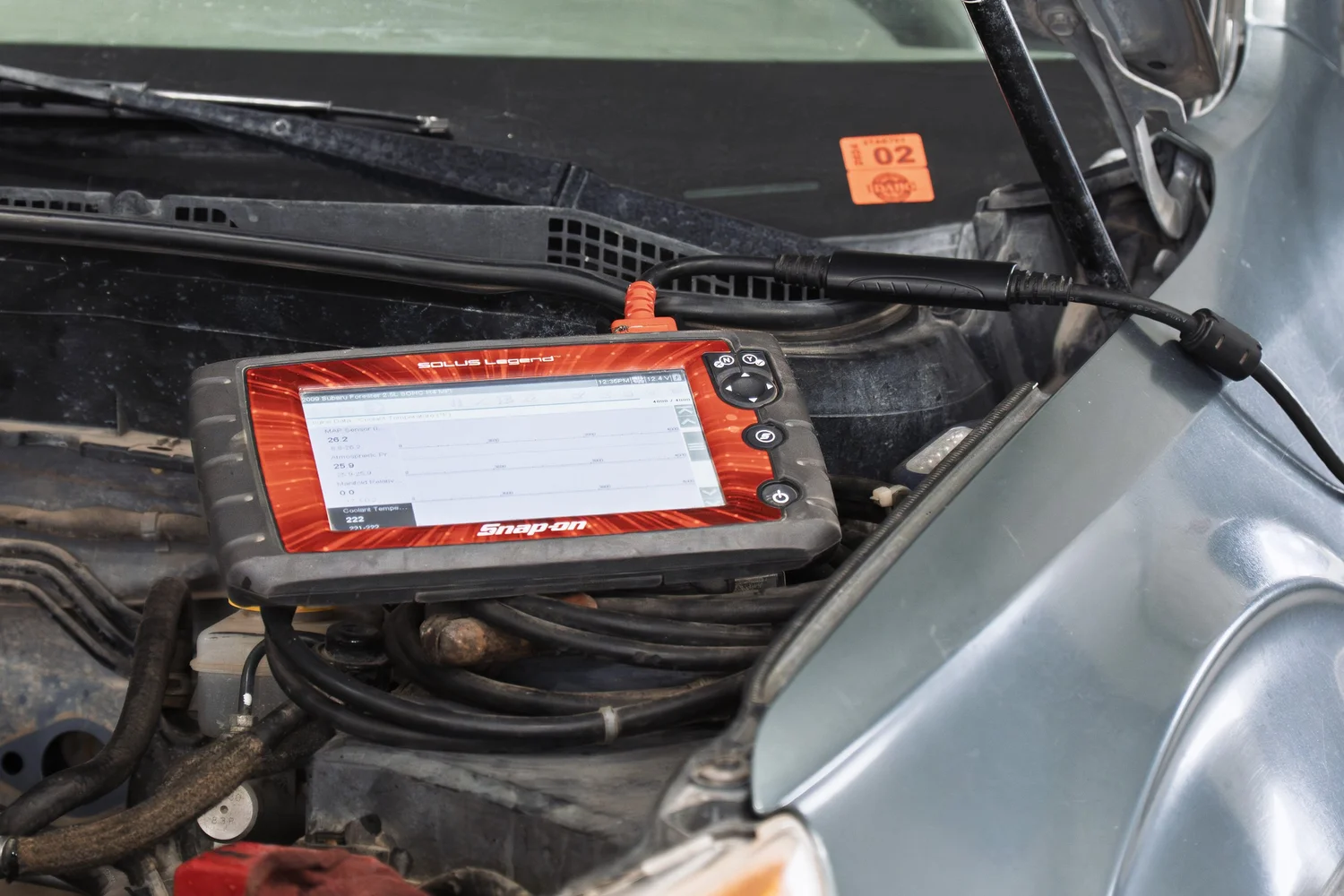
- Stored and pending codes pulled with professional scan tools
- Live data checked so we can see how sensors and systems respond
- Specific tests run to prove the root cause
- Findings explained to you in everyday terms
- An estimate in writing ahead of any repair
A code is a starting point
Consider the P0420 catalyst code. An oxygen sensor, a leak in the exhaust, oil contamination or the catalytic converter itself could be behind it. Replacing the first part a code suggests is not how we work.
Our scan equipment handles gas and diesel vehicles of all makes, and we keep it updated as new model years come out.
- Codes checked in every system
- Diagnostic fee credited when we do the repair
- You approve a written estimate first
Why the light turns on
The computer in your vehicle monitors hundreds of sensors. A reading outside the normal range gets logged as a code, and the dash light follows.
- Misfiring cylinderA cylinder, or several, isn't burning fuel properly
- Oxygen sensor troubleA very common code that hurts emissions and fuel economy
- Gas cap loose or crackedThe computer reads it as a leak in the evaporative emissions (EVAP) system
- Transmission-related codes
- Variable valve timing problems
- Throttle position sensor or throttle body faults
- Coolant temperature sensor or thermostat faults
- Injector or fuel pressure problems
- Faulty mass airflow sensor
- Low catalytic converter efficiency
- Failed ignition coil or spark plug
Driving with the light on
If the light is steady, power is normal, and there's no overheating or rough running, a short period of driving is generally okay. Don't let it go more than a few days, since a small repair can become a costly one when the light is ignored.
Stop and call us when the light is flashing, when other warning lights appear with it, when you smell something burning, or when the engine is running rough.
A steady light versus a flashing one
Steady means a fault was detected and saved. You should have it checked, and in most cases it's safe to drive to the shop.
Flashing means there's an active misfire. A catalytic converter can be damaged within minutes by one, so slow down and get the vehicle to a shop soon.
Check engine light FAQ
Didn't find your answer? Call (208) 543-8000.
Will a parts store read my code for free?
Most will, and you'll leave with a code number. That number identifies which system reported a fault. It doesn't identify the cause, and identical codes on different vehicles often call for different repairs.
Does the light ever go off without a repair?
Occasionally. A loose gas cap that's been tightened is a good example. After a few drive cycles the light can go out. If the underlying problem is still present, expect the light to return.
What's the charge for diagnosing a check engine light?
A diagnostic fee applies. Have the repair done here and the fee is put toward it. For current pricing, call (208) 543-8000. You're paying for diagnostic time and testing, which a simple code reader can't provide.
More services from Deep Creek
Need it looked at?
Give us a call or book online. You'll hear plainly what's wrong, and nothing starts until you have a written estimate.